Coating Cost and Lead Time for Industrial Projects
Coating cost and lead time depend on surface prep, coverage, film thickness, and logistics. This guide breaks down the key drivers, explains how to write a clear RFQ, and shows how to compare quotes fairly for industrial projects.
- Coating cost is driven by surface prep, coverage, film thickness, and logistics.
- A clear RFQ with specific parameters reduces quote variance and errors.
- Compare quotes on like-for-like basis: same substrate, same spec, same delivery terms.
- Lead time is shaped by raw materials, production capacity, and delivery distance.
- Build buffers into your schedule for surface prep and curing.
What actually drives coating cost
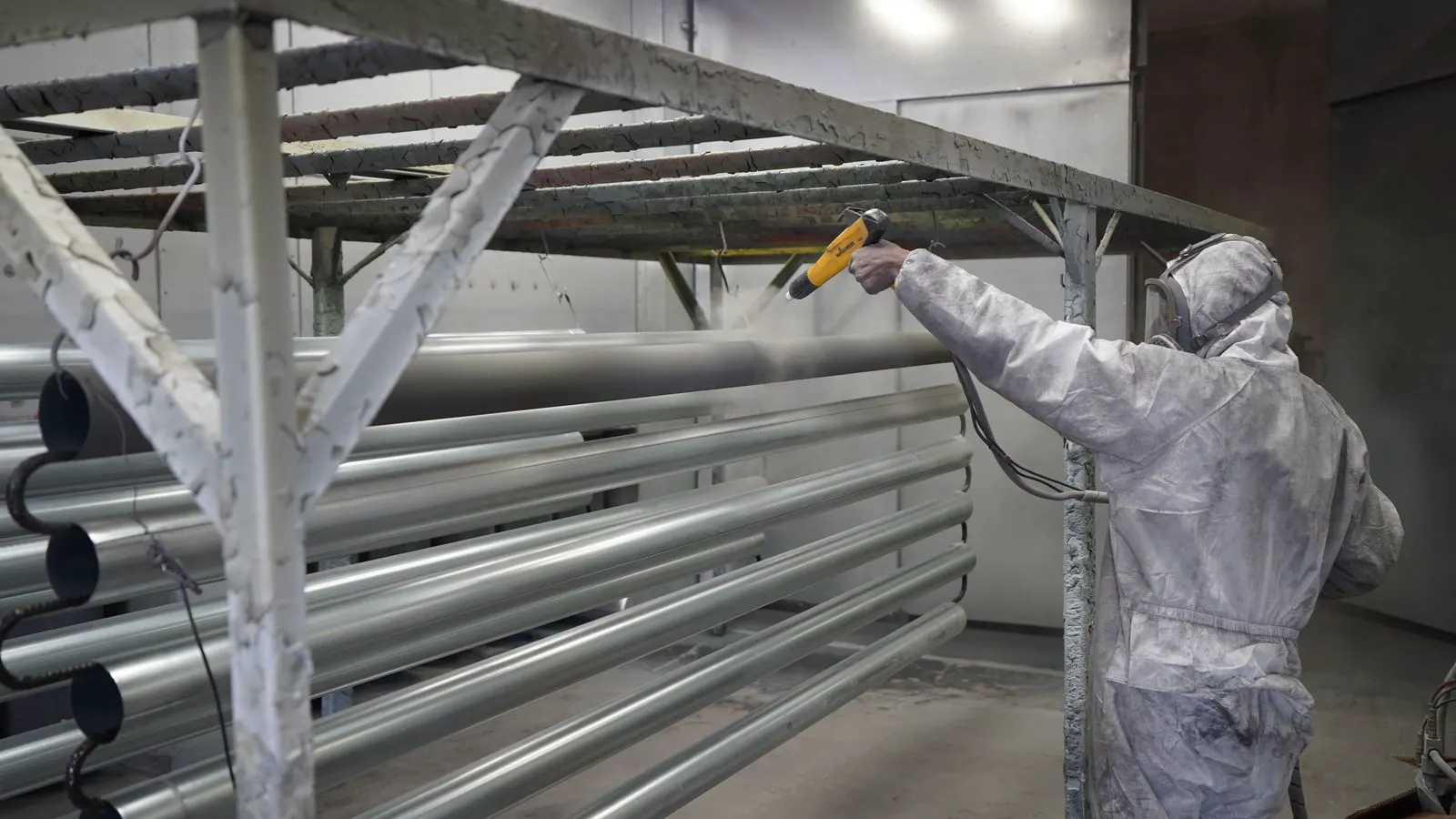
Coating cost is rarely a single number. It is a chain of decisions, each adding or removing cost. The substrate matters. A flat steel plate costs less to coat than a complex manifold with threaded ports and blind corners. Surface condition matters more than most buyers realize. A well-prepared surface needs fewer coats, less filler, and less rework. A poorly prepared one costs more in labor, materials, and schedule risk. The difference is often visible in the field. A plate that has been shot blasted to a fine profile, free of oil and rust, holds the first coat tightly. A plate that carries a film of grease or chalky oxidation rejects that same coat. The applicator must then add a primer or a surface conditioner, or strip the plate entirely. Both actions consume hours. Both actions extend the project.
Film thickness is the next major lever. Every extra micrometer of dry film adds material cost. It also adds drying time. It adds the chance of cracking, sagging, or poor adhesion. Buyers often underestimate this. They see a price per square meter and assume it covers the spec. It only covers the spec if the spec is clear. Consider a marine hull. A spec of 200 microns of dry film requires a different volume of material than a spec of 400 microns. The material cost doubles. The drying time doubles. The risk of runs or blisters rises. If the spec is ambiguous, the supplier may apply the minimum to save money. The buyer may end up with a coating that looks thick but lacks the protective barrier it was meant to provide. The spec must state the minimum dry film thickness, not just the target.
Labor is the quiet cost. A skilled applicator is not a commodity. If a spec is tight, a small area, or a critical surface, the hourly rate is higher. If the area is vast and the spec is standard, the rate is lower. The same goes for equipment. A small batch of high-solids urethane may cost more per liter than a bulk emulsion, but it may cut down on VOC abatement costs. The trade-off is often less obvious than the sticker price. A low-solids system may be cheap to buy but expensive to apply. It may require multiple coats. It may require a longer cure. A high-solids system may be expensive to buy but cheap to apply. It may cure in hours. It may require less ventilation. The total cost of ownership includes the environmental controls, the downtime, and the risk of non-compliance.
How lead time is set
Lead time is not just production time. It is the sum of several delays. Raw material availability is the first. Resins, pigments, and additives come from global supply chains. A key resin may be in short supply in one quarter and abundant in the next. This is why a quote that looks stable today may not be stable next month. A pigment used for a specific hue may be tied to a single source. If that source has a production halt, the coating cannot be mixed. The supplier may offer a substitute. The substitute may look the same in a sample pot but fail in a field test. The buyer must define the criticality of the color and the performance. If the color is cosmetic, the supplier has more flexibility. If the performance depends on a specific pigment, the lead time extends.
Production capacity is the second. A plant may have a standard lead time of two weeks for common products. A custom color or a specialty formulation may take four. If the plant is at capacity, the delay grows. If the order is large, it may be scheduled after existing production runs. The buyer should ask about the plant’s current backlog. A supplier with a high backlog may delay the start date. A supplier with a low backlog may start immediately. The start date is as important as the finish date.
Logistics is the third. A coating that ships by road from a nearby plant arrives in days. One that ships by sea from across an ocean takes weeks. A coating that ships by air is expensive and usually only justified for small, urgent orders. Delivery distance and mode set the floor. The buyer must also consider the shelf life. Some coatings have a short open pot life. If the coating arrives too late, it may be wasted. If the coating arrives too early, it may expire before use. The delivery schedule must align with the application schedule.
How to write a clear RFQ
A weak RFQ produces weak quotes. If the RFQ is vague, the supplier makes assumptions. If the assumptions differ, the quotes differ. The result is a comparison that looks fair on paper but is not fair in practice. The buyer must provide the data that the supplier needs to price the job accurately.
Start with the substrate. Name the material. Give the thickness. State whether it is new, refurbished, or previously coated. If it is previously coated, describe the current finish. A note on the existing coating system helps the supplier decide on adhesion promoters or strip requirements. For example, if the existing coating is a powder coat, the supplier may need to sand it or apply a chemical etch. If the existing coating is an oil-based enamel, the supplier may need to apply a solvent-based primer. The choice affects the cost.
State the surface prep. Do not just say “clean”. Say “Sa 2.5 blast” or “wet sand and degrease”. A specific standard removes guesswork. It also removes the need for the supplier to ask follow-up questions. It also makes the cost predictable. The prep method determines the labor time. A blast-cleaned surface requires a blaster and a dust collection system. A wet-sanded surface requires water, sandpaper, and a degreaser. The cost of the equipment and the disposal of the waste differ.
Define the specification. Name the coating system if you have one. If you do not, name the performance requirements. Salt spray hours, chemical resistance, temperature range, UV exposure. Name the dry film thickness. Name the number of coats. Name the cure schedule. The cure schedule is often overlooked. A coating that cures in one hour at 80 degrees is different from one that cures in seven days at 20 degrees. The buyer must specify the ambient conditions. If the site is cold, the cure time extends. If the site is humid, the cure may be delayed.
State the quantity. Give the area in square meters. Give the weight if it is a bulk order. Give the delivery date. Give the delivery terms. Give the payment terms. A clear RFQ is a contract in waiting. The buyer should also include the site conditions. Is the site indoors or outdoors? Is it a clean environment or a dusty one? Is there a crane available? These details affect the labor cost.
How to compare quotes fairly
A quote is not a number. It is a set of assumptions. Two suppliers can give different prices for the same job if their assumptions differ. One may assume a standard surface. The other may assume a difficult one. One may include delivery. The other may not. One may include on-site support. The other may not. The buyer must strip the quotes down to their components.
Put the quotes side by side. Check the substrate. Check the prep. Check the film thickness. Check the delivery. Check the payment terms. If two quotes differ by more than a few percent, ask why. Do not accept a vague answer. If the supplier cannot explain the difference, the difference is not a saving. It is a risk. The supplier may have assumed a simpler job. Or the supplier may have underestimated the difficulty. The buyer must verify the assumptions against the actual site conditions.
Do not compare the lowest price in isolation. A low price often means a low spec. It may mean a thinner film. It may mean a less durable resin. It may mean a longer cure. It may mean the supplier will not be there when something goes wrong. The cost of a failure is not in the quote. It is in the downtime. A coating that fails in a year costs more than a coating that costs more upfront but lasts for ten years. The buyer must look at the total cost of the project, not just the cost of the paint.
Cost and lead time for different project types
Small, urgent projects cost more. They are hard to schedule. They are hard to prep. They are hard to deliver. A one-off batch of a specialty coating is more expensive per liter than a bulk order. A small job on a critical asset is more expensive per square meter than a large, standard job. The supplier must mobilize the team quickly. The team may have to travel. The materials may have to be ordered separately. The lead time is short, so there is no time for errors.
Large, standard projects cost less. They are easier to schedule. They are easier to prep. They are easier to deliver. A large order of a standard product gets a better price per liter. A large area of standard surface gets a lower labor rate per square meter. The scale works in your favor. The supplier can optimize the production run. The labor team can work efficiently. The logistics can be consolidated. The buyer should group similar jobs together to take advantage of this scale.
Mixed projects are the hardest. They combine small, urgent jobs with large, standard ones. They require different prep. They require different coatings. They require different delivery schedules. The cost is higher. The lead time is longer. The risk is higher. Plan for it. The buyer should split the project into phases. The urgent jobs can be handled separately. The standard jobs can be scheduled together. This reduces the complexity and the cost.
A table of cost drivers
| Cost driver | What it affects | Typical impact |
|---|---|---|
| Surface prep | Labor, materials, schedule | High. Poor prep adds cost and delay. |
| Film thickness | Material, drying, cure | Medium. Each micrometer adds cost. |
| Substrate complexity | Labor, coverage, waste | High. Complex shapes raise cost. |
| Coating system | Material, VOC, cure | Medium. Specialty systems cost more. |
| Delivery terms | Logistics, buffer | Medium. Air freight is expensive. |
| Quantity | Scale, price per unit | High. Bulk orders reduce cost. |
How to manage the budget
Build the budget in layers. Do not start with the coating price. Start with the surface prep. That is where the money often goes. Then add the coating material. Then add the labor. Then add the logistics. Then add the buffer. The prep cost can be as high as the coating cost. If the surface is difficult, the prep cost can be higher than the coating cost. The buyer must estimate the prep cost based on the site conditions. If the site is inaccessible, the prep cost rises. If the site is contaminated, the prep cost rises.
The buffer is not a waste of money. It is a plan for the unknown. It covers the unexpected surface condition. It covers the late delivery. It covers the rework. A budget without a buffer is a wish. The buffer should be proportional to the risk. A high-risk project needs a larger buffer. A low-risk project needs a smaller buffer. The buyer should review the buffer after the first phase of the project. If the actual costs are lower than estimated, the buffer can be reduced. If the actual costs are higher, the buffer can be used.
Check the quote against the spec. Do not compare the quote to the quote. Compare the quote to the job. If the job changes, the quote changes. If the spec changes, the quote changes. Keep the documents aligned. The buyer should maintain a single source of truth for the project. All changes to the spec should be documented. All changes to the schedule should be documented. This prevents disputes and ensures that both parties are working from the same data.
Frequently asked questions
What is the biggest cost driver in an industrial coating project?
Surface prep is usually the biggest cost driver. It affects labor, materials, and schedule. Poor prep adds cost and delay.
How do I reduce coating cost without cutting corners?
Reduce waste. Improve surface prep. Use the right film thickness. Buy in bulk. Compare quotes on a like-for-like basis.
What is the typical lead time for a standard coating order?
Lead time depends on raw materials, production capacity, and delivery. A standard order may take two to four weeks. A custom order may take longer.
How do I compare two quotes that are different?
Check the assumptions. Look at the substrate, prep, film thickness, delivery, and payment terms. If the specs differ, the quotes are not comparable.
Should I pay more for a faster delivery?
Yes, if the project is critical. A delay in coating can delay the whole project. The cost of downtime is often higher than the cost of air freight.