Liquid vs Powder Coating Cost and Coverage Comparison
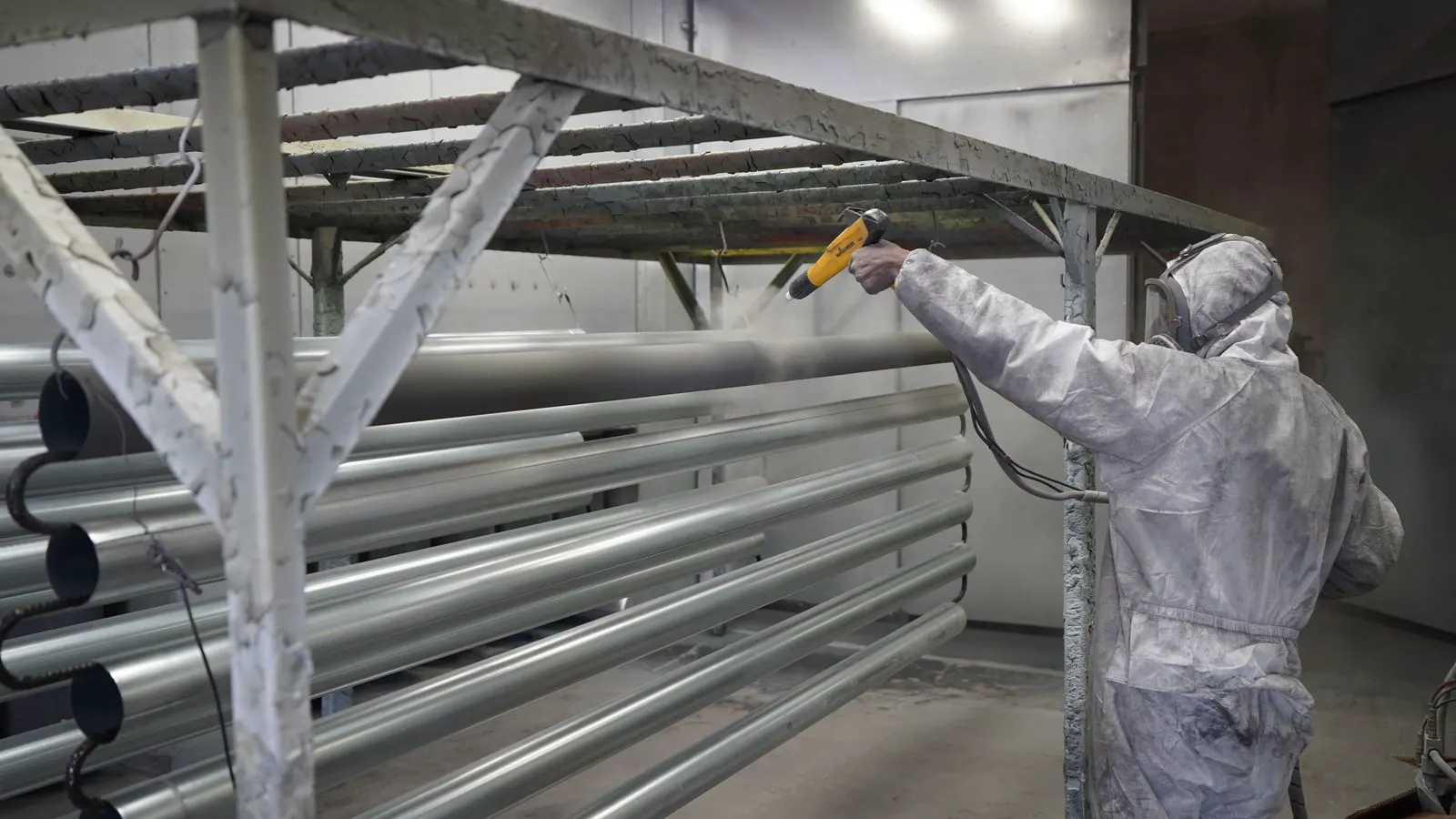
Liquid and powder coating differ in cost drivers. Liquid often costs more for application and waste control. Powder reduces overspray but requires higher equipment and curing costs. Coverage depends on film thickness and substrate preparation.
- Liquid coatings typically cost more per square meter due to overspray and solvent handling.
- Powder coating reduces waste and offers thicker, more uniform coverage with less masking.
- Equipment and curing costs shift the price balance toward powder for high-volume work.
- Substrate preparation and film thickness requirements drive more cost variance than the coating type alone.
What Drives the Real Cost of Each Method
The sticker price per kilogram or liter tells only a small part of the story. Total cost is built from material, labor, equipment, waste, and rework. A thin liquid topcoat may look cheap per liter. It can become expensive when overspray, masking, and solvent disposal add up. Powder may cost more per kilogram. It often wastes less during application.
The comparison depends on the project size. A small batch of custom parts changes the math. A long production run changes it again. The choice is not just liquid versus powder. It is which cost line you want to control.
Consider a shop producing steel frames for agricultural equipment. If the run is continuous for three months, the capital cost of the powder oven gets spread across thousands of parts. The labor cost per unit drops. If the run is a two-week prototype job with ten different colors, that same oven sits idle for most of the shift. The energy bill stays high. The cleaning labor spikes. In that scenario, the liquid spray booth becomes the cheaper path. The material cost per liter is higher, but the labor and energy lines shrink to match the volume.
Engineers must also track the life of the substrate. A coating that fails early forces rework. Rework includes stripping, re-grinding, and re-coating. If the liquid system requires a longer cure time that pushes parts back into the production queue, the hidden cost is lost throughput. If the powder film is too thick, the part may warp in the oven. Both problems add money that never appears on the initial material invoice.
How Coverage Changes the Final Price
Coverage is measured as the volume of coating applied per unit area. In practice, engineers track dry film thickness in micrometers. The target thickness determines how much material must be applied. If the substrate is rough, the required thickness rises. If the surface is flat, the same thickness uses less material.
Liquid sprays can be tuned to a thinner film. Powder often builds a thicker layer with fewer passes. That thicker layer can be a benefit for impact resistance. It can also be a cost driver if the specification does not require it.
The table below compares the main approaches.
| Option | Best for | Limitations |
|---|---|---|
| Liquid spray | Thin films, color changes, small batches | Overspray, solvent handling, longer cure |
| Powder electrostatic | Uniform thick films, metal parts | Color changeover, thicker minimum film |
| Powder fluidized bed | Large flat sheets, uniform coats | Equipment cost, limited part size |
| Dipping | Small parts, full immersion | Drying time, limited coating thickness |
| Roller application | Flat panels, high volume | Edge quality, limited surface complexity |
For example, a thin clear coat on a plastic housing may only require a few micrometers. A liquid spray gun can deliver that film with high precision. The operator controls the distance and speed to keep the thickness consistent. A powder system might deposit a thicker layer, creating an uneven surface or a glossy texture that does not match the design intent. In that case, the powder cost is not just higher; it is the wrong tool for the job.
Conversely, a thick protective coat on a bridge girder needs significant dry film thickness to block moisture. Liquid spray requires multiple passes to build that thickness. Each pass needs flash-off time. The part sits in the booth longer. The booth must be kept at a stable temperature to prevent sagging. Powder electrostatic application can build the required thickness in a single pass. The part moves through the oven. The process time is shorter. The material waste is lower.
Where Liquid Coating Wins
Liquid systems fit projects that need flexibility. Color changes are quick. Masking can be adjusted for small parts. The equipment can be smaller. A shop that coats a few hundred parts per month may find liquid easier to run.
The trade-off is waste. Solvent-based liquid coatings lose material to the environment during spraying. Waterborne systems reduce some of that, but they still require careful booth control. The booth becomes part of the cost.
Masking also adds labor. If the part has multiple colors or clear areas, the operator spends more time preparing the surface. That labor shows up in the final price.
Think of a custom furniture workshop that produces ten different chair models per week. Each model has a different wood grain finish and a different color. The operator mixes small batches of liquid paint. They clean the gun between colors. The booth filters need regular changing. The waste is contained in small quantities. The labor cost is manageable because the equipment is simple.
In contrast, a powder line requires a large oven. If the workshop only coats furniture on Fridays, the oven sits cold most of the week. The startup energy cost is high. The changeover from one color to another involves sweeping the hopper, cleaning the applicator, and waiting for the line to reach temperature. The labor cost per part rises sharply.
Liquid systems also handle complex geometries well. Intricate brackets with small cavities can be coated by hand spraying. The operator can reach areas that a powder applicator might miss. The cost of labor is higher, but the quality is better. The waste is lower because the operator controls the flow.
Where Powder Coating Wins
Powder coating shines when uniformity matters. Electrostatic powder clings to the part. It reduces the need for multiple passes. The film is thicker and more consistent. For structural steel, powder often outperforms liquid in impact resistance.
The cost advantage comes from waste reduction. Unused powder can be recycled. The booth is simpler than a liquid spray booth. There is no solvent disposal. Curing ovens add energy cost, but they are predictable.
The limitation is changeover. Switching powder colors requires cleaning. Drying the line takes time. If the production run is short and the color changes often, the labor and downtime erode the savings.
A manufacturer producing automotive bumpers runs the same color for months. The powder line runs continuously. The parts move through a conveyor. The oven temperature is stable. The waste is minimal. The labor per part is low. The cost is predictable.
Now consider a shop that produces custom enclosures for electronics. Each enclosure has a unique color. The shop produces twenty units per week. The powder line would require a large oven and a complex applicator. The changeover time for each color would dominate the production schedule. The labor cost per unit would be high. The waste from the small batches would be significant. In this case, liquid spray is the better choice. The operator can mix small batches. The booth is smaller. The changeover is quick. The cost aligns with the volume.
How Equipment and Curing Shift the Balance
Equipment is the biggest hidden cost. A powder line needs a curing oven, a powder applicator, and a filtration system. A liquid line needs a spray booth, atomizer, and solvent recovery. Both need maintenance.
Curing time changes labor. Powder cures in an oven. The part sits still. Liquid cures in air or a low-temperature oven. Some liquid systems dry fast, but full cure takes longer. That longer cure extends the part residence time.
For high-volume work, powder often wins. The oven runs continuously. Parts move through a conveyor. The labor per unit drops. For low-volume work, the upfront equipment cost matters more. A shop may choose liquid to avoid a large oven investment.
The equipment choice also affects the facility. A powder line requires a space for the oven. The oven must be insulated. The ventilation must handle the heat. The liquid line requires a booth that meets local environmental regulations. The booth must have filtration. It may need a solvent recovery system. The space requirements differ. The capital cost differs.
Curing time also affects inventory. If the part must sit in the oven for two hours, the shop needs a holding area. If the part can be sprayed and moved to a rack, the holding area is smaller. The floor space is a cost. The labor to move parts is a cost. These factors are often ignored in initial comparisons.
How to Estimate the Cost per Square Meter
Do not start with the material price. Start with the finished area. Subtract the waste factor. Add the preparation cost. Add the curing cost. Add the rework cost.
A practical method is to measure the part area in square meters. Apply a waste factor based on history. Liquid systems often need a higher waste factor. Powder systems need a lower one. Then multiply by the material cost per kilogram or liter.
The table below shows a simple structure.
| Cost Line | Liquid | Powder |
|---|---|---|
| Material | Higher overspray loss | Lower waste |
| Labor | More masking, more passes | Less masking, fewer passes |
| Equipment | Spray booth, atomizer | Oven, applicator |
| Energy | Drying, solvent recovery | Oven curing |
| Rework | More frequent | Less frequent |
To build this model, collect data from the last three projects. Measure the area of each part. Record the material used. Record the labor hours. Record the energy consumption. Record the rework cost. Use these numbers to build a baseline.
A shop that coats metal cabinets uses liquid spray. The waste factor is 15 percent. The labor cost is 20 percent. The energy cost is 5 percent. The material cost is 60 percent.
Another shop coats steel frames using powder. The waste factor is 5 percent. The labor cost is 15 percent. The energy cost is 30 percent. The material cost is 50 percent.
The liquid system has a higher material cost. The powder system has a higher energy cost. The labor cost is similar. The total cost depends on the relative price of material and energy in the local market. If energy is cheap, powder wins. If material is cheap, liquid wins.
When to Pick Liquid
Pick liquid when the part is small, the color changes often, or the film must be thin. Liquid also fits shops that already have spray equipment. It is easier to retrofit. It handles complex shapes without heavy powder handling.
If the project is a one-off or a prototype, liquid is often the safer choice. The equipment cost is lower. The learning curve is shorter. The waste is manageable at small scale.
Liquid is also the better choice for parts that cannot go into an oven. Some plastics melt at high temperatures. Some electronic components are sensitive to heat. Liquid coatings can be applied at room temperature. The cure time is longer, but the part is not damaged.
The operator skill level matters. Liquid spray requires a trained operator. The technique affects the quality. The waste affects the cost. If the shop has an experienced operator, the cost is lower. If the operator is new, the waste is higher. The learning curve is a cost.
When to Pick Powder
Pick powder when the run is long, the part is metal, and the coating needs thickness. Powder fits structural parts, machinery frames, and large panels. It reduces rework. It simplifies the booth.
If the color is fixed for a long run, powder saves labor. If the part is flat, fluidized bed can be efficient. If the part is complex, electrostatic powder works well.
The decision is not about quality alone. It is about which cost line you can control. Liquid gives flexibility. Powder gives consistency.
Powder is also the better choice for outdoor parts. The film is thicker. It resists UV exposure better. It resists impact better. The life of the coating is longer. The maintenance cost is lower. The total cost of ownership is lower.
The operator skill level matters less for powder. The applicator does the work. The oven does the curing. The operator monitors the process. The consistency is higher. The waste is lower. The cost is more predictable.
Common Cost Mistakes to Avoid
The first mistake is ignoring preparation. Surface preparation drives cost more than the coating type. Grinding, cleaning, and priming must be done right. A cheap coating on a dirty surface fails.
The second mistake is underestimating waste. A shop that assumes no waste will overprice the material savings. Add a realistic waste factor based on the shape and spray method.
The third mistake is ignoring curing energy. Powder ovens use a lot of heat. Liquid booths use less. The energy cost changes with batch size.
The fourth mistake is treating color change as free. Powder changeover takes time. Liquid color change is faster. If the run has many colors, the labor cost changes.
The fifth mistake is ignoring the life of the coating. A cheap coating that fails in one year costs more than an expensive coating that lasts five years. The cost per year of protection is the real cost. The initial material price is only part of the picture. The maintenance cost is the other part. The total cost of ownership is the sum of both.
The sixth mistake is ignoring the regulatory cost. Liquid coatings emit volatile organic compounds. The shop must meet local regulations. The booth must have filtration. The waste must be disposed of correctly. The cost of compliance is a real cost. Powder coatings emit less. The regulatory cost is lower. The total cost is lower.
The seventh mistake is ignoring the labor cost. The operator is the most expensive part of the process. If the operator is skilled, the cost is lower. If the operator is new, the cost is higher. The training cost is a real cost. The productivity cost is a real cost. The total cost is higher.
The eighth mistake is ignoring the rework cost. If the coating fails, the part must be stripped. The stripping cost is high. The grinding cost is high. The re-coating cost is high. The total cost is higher than if the coating had been done right the first time. The prevention cost is lower. The cure cost is higher. The total cost is lower.
The decision is not about which method is better. It is about which method fits the project. The project size, the part shape, the color change frequency, and the life requirement determine the cost. The material price is only one part of the picture. The total cost is the sum of all parts. The engineer must calculate the total cost. The buyer must pay the total cost. The shop must manage the total cost. The success of the project depends on the total cost. The total cost is the real cost.
Frequently asked questions
Which coating type has lower material waste?
Powder coating usually has lower waste. Unused powder can be recycled. Liquid coatings lose material to overspray and solvent handling.
How does film thickness affect cost?
Higher film thickness uses more material. Powder often builds thicker films with fewer passes. Liquid can be tuned to thinner films, which may save material.
When is liquid coating cheaper?
Liquid coating is often cheaper for small batches, frequent color changes, and shops with existing spray equipment. The lower upfront cost offsets the higher waste.
When is powder coating cheaper?
Powder coating is often cheaper for high-volume runs of metal parts. It reduces rework and waste. The curing oven cost is predictable.
Does powder coating always cost more?
No. The total cost depends on part size, run length, color changes, and equipment. Powder can be cheaper when waste and rework are reduced. ===END===