How to Estimate Paint Cost per Square Meter
Calculate paint cost per square meter by multiplying net coverage area by the coating price per liter and dividing by the product's coverage rate. This method isolates material cost from labor and waste, giving you a reliable baseline for budgeting and comparing coating systems.
- Base your calculation on net coverage area, not gross sheet or wall area.
- Use the manufacturer's coverage rate in square meters per liter, not the can size.
- Add a waste factor for cutting-in, thinning, and rework.
- Verify the result by comparing the calculated cost per square meter to a rough material budget.
Start with the surface area you will actually coat
The first step is to measure the surface that receives paint. Do not use the raw area of a wall, panel, or tank. Subtract openings, doors, windows, flanges, and any area that remains bare. This net area is the base for every calculation that follows.
If the surface is irregular, break it into rectangles and triangles. Measure each section separately. Sum the values. The result is the net coating area in square meters.
Confirm the coating coverage rate
The second input is the coverage rate. This figure comes from the product data sheet and is usually expressed in square meters per liter of the final, applied coating. It is not the same as the can size. A five-liter can does not equal five square meters. It equals five liters of material.
Check whether the coverage rate is listed for one or two coats. If the data sheet gives a single value, confirm whether the spec calls for one or two coats. If it gives separate values, use the one that matches the applied film thickness. For a two-coat system, divide the net area by the per-coat rate and multiply by two, or use a combined rate if the supplier provides one.
Adjust the coverage for the substrate and method
The third step is to adjust the nominal coverage rate for real conditions. A porous concrete surface drinks more material than a sealed steel panel. A smooth, low-energy surface may throw off more overspray. A textured or rough surface may need a heavier application to achieve the required film thickness.
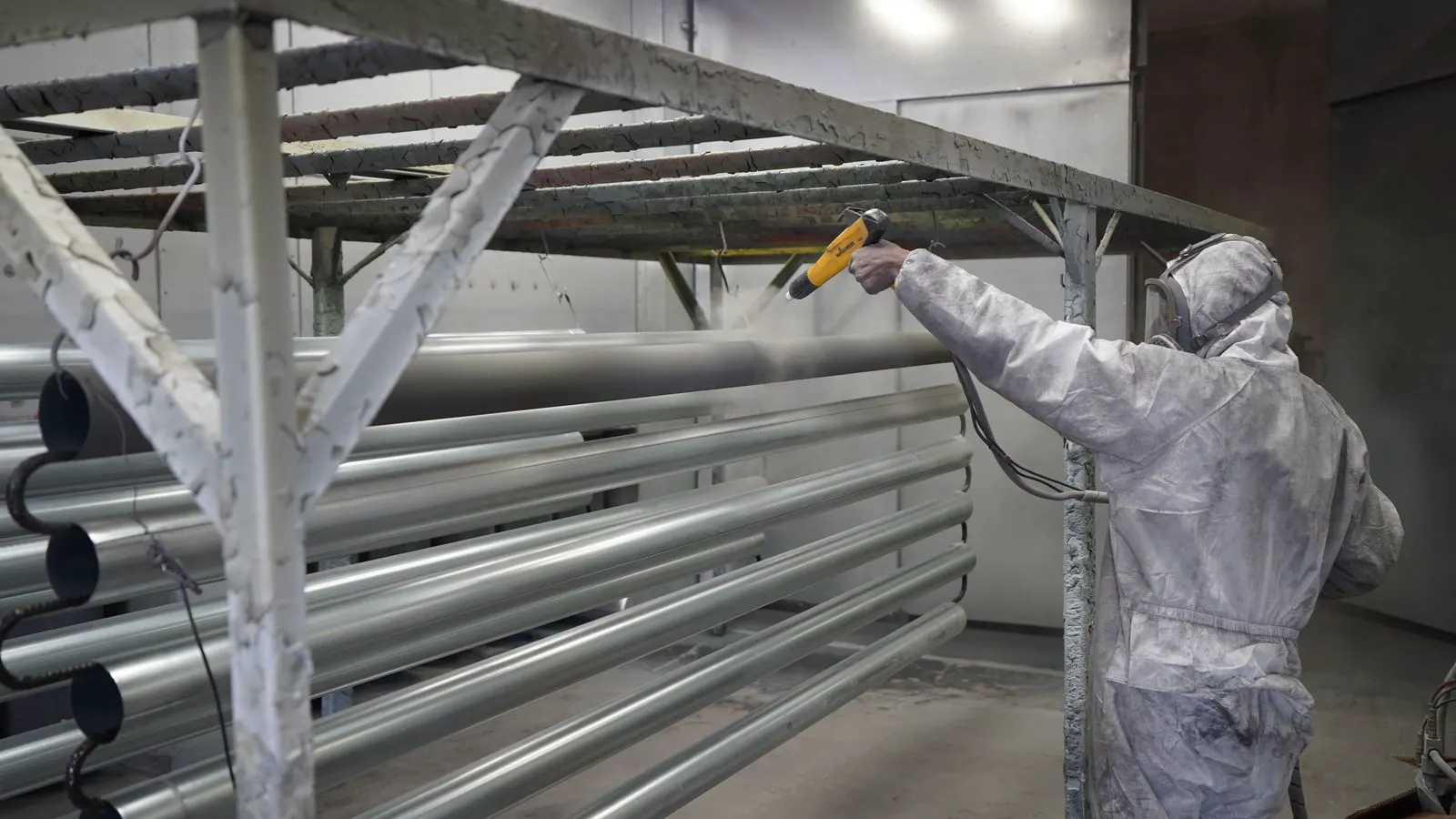
If you are spraying, account for the transfer efficiency of the equipment. Airless guns can transfer a high percentage of the material into the wet film, while air-assisted guns often lose a larger share. Do not use a single number. Use the rate that the supplier recommends for the specific substrate and application method. If you are brushing or rolling, the waste is different again. Brushing creates a wet edge and a higher ratio of material left on the tool. Rolling is more efficient. The adjustment here is a percentage, not a fixed value.
Apply the waste and rework factor
The fourth step is to add waste. Waste includes thinning, cleaning nozzles, priming a small test area, and re-coating areas that were missed or damaged. For small jobs, a higher percentage is typical. For large, continuous runs, the waste drops. Do not pick a number without checking the job size and the complexity of the geometry.
A practical approach is to take the adjusted coverage rate and reduce it by the waste percentage. If the adjusted rate is eight square meters per liter and your waste is ten percent, your working rate becomes about seven.2 square meters per liter. This is the rate you will use in the final division.
Calculate the liters required
The fifth step is to divide the net area by the working rate. This gives the volume of coating you need in liters. Keep the number in liters. Do not round up to cans yet. The can calculation comes later, after you have the cost per liter.
If the result is a decimal, keep it. You will buy whole cans, but the cost per square meter must be based on the exact material used. Rounding the volume early will skew the unit cost.
Convert the volume to cost
The sixth step is to find the price per liter. Take the total cost of the cans you need and divide by the total liters in those cans. If you are buying a five-liter can and a two-liter can, add the total cost and divide by seven. This is the effective price per liter.
If the price per liter is not given, do not estimate from the can price. The can price includes the packaging. The cost per liter is the only figure that connects the material to the area.
Compute the paint cost per square meter
The seventh step is to divide the total material cost by the net area. This gives the paint cost per square meter. This number is the material cost only. It does not include labor, equipment, or waste from the spray booth. It is the cost of the coating that lands on the surface.
Use this figure to compare different coating systems. A high-performance epoxy may cost more per liter but cover more square meters per liter. A standard alkyd may be cheaper per liter but need more coats. The cost per square meter shows the true material difference.
Verify the result
The final step is to verify. Check your math. Re-read the coverage rate. Confirm the net area. If the cost per square meter is far lower than expected, look for a missing waste factor or a coverage rate that was taken for the wrong number of coats. If it is far higher, check whether the coverage rate was for a thin film and the job requires a thick film.
A quick sanity check is to multiply the cost per square meter by the net area. The result should match the total material cost. If it does not, there is an error in the calculation.
Common mistakes that skew the estimate
One common mistake is using the gross area. If you include doors and windows in the area, your cost per square meter drops. The material cost does not drop. The number looks better than it is.
Another mistake is mixing the coverage rate with the can size. If you assume a five-liter can covers five square meters, your estimate is off by a factor of the actual coverage rate. The data sheet is the only source for the rate.
A third mistake is ignoring the number of coats. If the spec calls for two coats and the coverage rate is for one coat, your material volume is halved. The cost per square meter is double what it should be.
A fourth mistake is using a single waste factor for all jobs. A small, complex assembly needs more waste than a large, flat panel. The waste factor must match the job.
How the estimate feeds the budget
The paint cost per square meter is one line item in a larger budget. It sits next to labor, equipment, and consumables. It does not replace them. It isolates the material cost so you can compare systems. If you switch from a solvent-based coating to a water-based system, the cost per square meter may change. The budget line changes. The labor cost may change too, but that is a separate line.
Use the figure in the pre-project checklist. It helps you set a material budget before the first can is opened. It also gives you a baseline to track against during the job. If the actual consumption is higher than the estimate, the variance is visible.
A table of typical inputs
The table below shows the values you need to collect before you start the calculation.
| Input | Source | Typical unit |
|---|---|---|
| Net area | Site measurement | Square meters |
| Coverage rate | Product data sheet | Square meters per liter |
| Number of coats | Specification | Count |
| Waste factor | Job assessment | Percentage |
| Price per can | Supplier quote | Currency per can |
| Can size | Supplier quote | Liters per can |
Keep the estimate practical
The goal is a number you can use. A perfect estimate is less useful than a good one that is easy to defend. If you cannot get the exact coverage rate for the substrate, use the supplier’s rate for the closest substrate and add a larger waste factor. If the job is small, add more waste. If the job is large and simple, add less. The method is the same. The inputs change.
The paint cost per square meter is a material cost. It is not the total project cost. But it is the anchor. Once you have it, the rest of the budget builds on a solid base.
Frequently asked questions
Can I use the coverage rate from the can label to estimate cost per square meter?
No. The can label shows the volume in liters. The coverage rate is in square meters per liter and comes from the product data sheet. The two are different values.
How do I handle a surface that needs two coats?
Multiply the net area by two, or divide the net area by the per-coat coverage rate and multiply by two. Use the rate that matches the applied film thickness for each coat.
Does the waste factor change with the application method?
Yes. Spraying, rolling, and brushing all have different waste profiles. Use the waste factor that matches the method and the job complexity.
What if the supplier only gives the cost per can and not the cost per liter?
Divide the cost per can by the can size in liters. This gives you the cost per liter. Use that figure in the final calculation.
Should I include labor in the paint cost per square meter?
No. The paint cost per square meter is the material cost only. Labor, equipment, and consumables are separate budget lines.